
The Perfectionist
“If I can’t do it properly, I won’t start.”
“You care about doing things well and when something matters to you, you want to know you're making a good decision.”
You're thoughtful, conscientious and someone who pays attention to detail. You probably like having a plan, understanding what's expected and knowing you've considered your options before deciding what to do.
Those qualities have likely served you incredibly well. They help you prepare, make considered decisions and maintain the high standards you expect of yourself. The challenge comes when there isn't a clear answer.
When circumstances are unpredictable or you don't have enough information to know how something will turn out, you may find it harder to feel confident in the decision you're making. Creating structure, gathering information or sticking with what you know can help restore some of that certainty.
There's nothing wrong with wanting to make good decisions. The question is whether you need to know the outcome before you can trust yourself to make one.
This is not a personality type. It is the protective pattern your brain runs automatically when you are under pressure.
Emotional need
To feel safe from criticism — to be beyond reproach, and never caught getting it wrong.
Protective strategy
Control the conditions. If everything is planned, prepared and perfect, nothing can be judged — so your brain delays until the standard can be guaranteed.
Coaching strategy
Lower the bar to entry, not the standard. We shrink actions until starting is easy, treat restarts as part of the design, and let evidence replace anxiety.
Mind Monkey™
The Critic — “That wasn’t good enough. You may as well start again properly next week.”
Power Shift™
Shrink it until it is almost embarrassing. Pick the thing you keep postponing and reduce it to a two-minute version you could do on your worst day. Two minutes, daily, for a week. The point is not the two minutes — it is proving to your brain that starting imperfectly is still starting.
Safety — “I need to know I'm making the right decision.”
“What if I get this wrong?”
Your brain likes information, structure and enough certainty to feel confident about what happens next.
When those things aren't available, your Mind Monkey™ may start asking that question, so you might gather more information, think through the options or look for a clearer answer before deciding what to do. That's not necessarily overthinking. Sometimes it's exactly what making a good decision requires.
The blind spot appears when certainty about the outcome becomes a requirement for trusting the decision, because some things simply can't be known in advance.
Menopause can make this particularly challenging because your body may become less predictable than you're used to. Your sleep, energy, appetite, symptoms and recovery can fluctuate, while something that worked well previously may need adapting as your circumstances change.
There are absolutely evidence-based foundations that can support you, but there isn't one perfect menopause plan that guarantees exactly how your body will respond. That's why understanding your body becomes so valuable.
Sometimes you'll have enough information to make a clear adjustment. At other times, the best decision may be to stay consistent, observe what's happening and give yourself more time before deciding whether anything needs to change.
Your body doesn't need you to get everything right. It needs you to become confident in noticing, responding and adapting.
- Thoughtful
- Conscientious
- Reliable
- Considered
- Detail-oriented
- Someone who genuinely cares about doing things well
You notice things other people may miss and you're prepared to give important decisions the thought they deserve. When you trust what you're doing, your commitment can be incredibly strong.
Your standards aren't something we're trying to lower. We're going to add flexibility to them.
You care about making good decisions but the uncertainty can sometimes feel uncomfortable.
- You may spend longer gathering information when there isn't actually a definitive answer available.
- You may continue questioning a decision because the outcome hasn't yet confirmed whether you were “right”.
- When something doesn't go according to plan, you may be quick to question whether the plan itself was wrong rather than considering whether it simply needs adapting.
That's where high standards can become a little too rigid.
The opportunity isn't to care less or become comfortable making poor decisions. It's learning that changing your approach when you receive new information doesn't mean the original decision was a mistake. Sometimes adapting is exactly what a good decision-maker does.
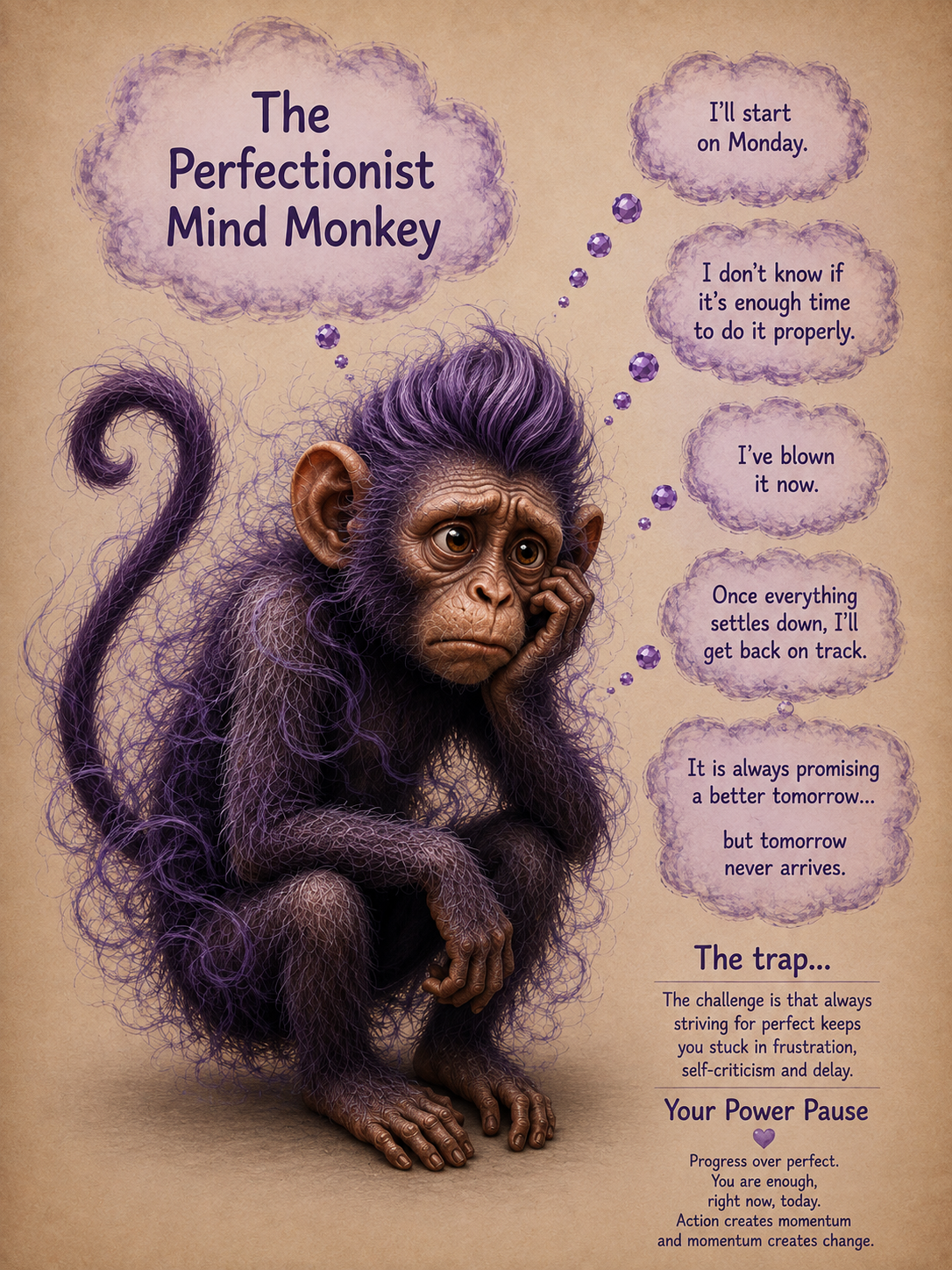
“Don't get this wrong.”
“What's the right thing to do?”
“I just need a little more information.”
“What if this doesn't work?”
“This isn't how it was supposed to go.”
That voice isn't something you need to silence. It reflects your desire to make thoughtful decisions and avoid unnecessary mistakes.
The skill is recognising when more information will genuinely help and when you're asking for certainty that simply isn't available yet.
This week, notice one situation where you're looking for greater certainty before deciding what to do.
Rather than asking: “How do I know this is the right decision?”
Try asking: “What's the best decision I can make with what I know right now?”
You might decide you need more information. You might make an adjustment or you may realise you're comfortable continuing with what you're already doing.
The important part is knowing that if something changes or you learn something new, you can respond to that too.
That's how self-trust develops, not by always predicting the right outcome but by becoming confident in your ability to work with what happens next.
Your high standards aren't the problem and you don't need to become someone who leaves important decisions to chance. Your attention to detail, thoughtfulness and desire to do things well are strengths.
The opportunity is to combine those strengths with enough flexibility to recognise that a good decision doesn't always come with a guaranteed outcome.
You can make the best decision available to you, observe what happens and change course when new information gives you a reason to. You don't need complete certainty when you trust the woman making the decision.
POWER30 gives you structure without asking you to get everything right: thirty days of small daily actions, with room to learn, adjust and keep moving.