
The Achiever
“If I push harder, I’ll get there.”
“You've achieved a lot, but somehow there's often another finish line waiting for you.”
You're capable, driven and someone people know they can rely on. When something matters to you, you're prepared to put the work in and you probably don't need much encouragement to follow through once you've decided you're going to do something.
Those qualities have likely contributed to many of the things you're proud of. They've helped you build a career, support the people you care about, navigate difficult periods and achieve things that once felt challenging.
For an Achiever, though, doing can become about more than simply getting things done.
Recognition matters to you. Knowing you've made a difference, contributed something valuable or done something well can give you a strong sense of satisfaction and reinforce something important: “I'm capable. I matter. I'm enough.”
When life becomes difficult or uncertain, it's therefore quite natural for your response to be to increase the effort. If something isn't working, you find another way. If there's more to do, you step up. If things become difficult, you keep going.
It's a strategy that's probably served you extremely well. The question is whether more effort is always the thing that's going to serve you best now.
This is not a personality type. It is the protective pattern your brain runs automatically when you are under pressure.
Emotional need
To feel worthy — to know that you have done enough, and therefore that you are enough.
Protective strategy
Do more. Effort became the way you created safety, certainty and proof of your value, so under pressure your brain reaches straight for output.
Coaching strategy
Separate worth from output. We keep the drive and give it a new target: recovery scheduled as a task, progress measured by consistency rather than volume.
Mind Monkey™
The Taskmaster — “You haven’t done enough yet. One more thing and then you can stop.”
Power Shift™
Schedule recovery as a task, not a reward. For the next seven days, put one twenty-minute recovery block in your diary each day and treat it exactly like a client meeting. Not when you have finished. Before. Your brain will call it lazy — that is the old software talking. Pause, notice it, and do it anyway.
Recognition — “See me.”
“Am I enough?”
Achievement can provide reassurance because it gives you evidence of your capability and contribution. You accomplish something, solve the problem or receive recognition for what you've done and, for a moment, there's a sense of satisfaction.
Then another goal appears, somebody needs something or you notice the next thing that could be improved.
There's nothing wrong with wanting to achieve or being proud of what you're capable of. The blind spot appears when doing more becomes the automatic way you reassure yourself that you're doing enough. That's when the finish line can keep moving without you necessarily noticing it.
Menopause can make your usual strategy worth reconsidering because your body may not always respond to effort in quite the same way it once did.
Hormonal changes can influence sleep, body composition and recovery, while stress, nutrition, training and everything else happening in your life also affect how you feel and what you have capacity for.
That doesn't mean you need to stop challenging yourself or automatically do less. It means becoming better at recognising where your effort will give you the greatest return.
Sometimes your body will benefit from movement or a challenging strength session. At other times, eating enough, protecting your sleep or allowing yourself appropriate recovery may be far more useful than adding something else.
These things aren't rewards you earn after you've worked hard enough. They're part of what allows you to continue doing the things that matter to you.
- Driven
- Resilient
- Dependable
- Courageous
- Committed
- Someone people know they can count on
When you decide something matters, you're prepared to take action. You don't necessarily wait for motivation before getting started and your willingness to follow through can create momentum not only for you, but for the people around you.
Your drive isn't something we're trying to take away. It's something we're going to learn to use more intentionally.
You're capable of carrying a lot but this may mean you may not always notice how much you're carrying.
- You can continue functioning through busy periods, tiredness and competing demands because finding a way through is something you're very good at.
- That can make it harder to recognise when the strategy that's helping you keep going is also taking more from you than you'd like.
- You may find yourself measuring progress by what still needs to be done rather than recognising everything you've already achieved.
This doesn't mean every busy week requires you to slow down or that pushing yourself is inherently a problem. Your blind spot is simply assuming more effort is always the answer.
Learning when to push, when to stay consistent and when your body would benefit from support or recovery gives you another strategy to use alongside the one you already know so well.
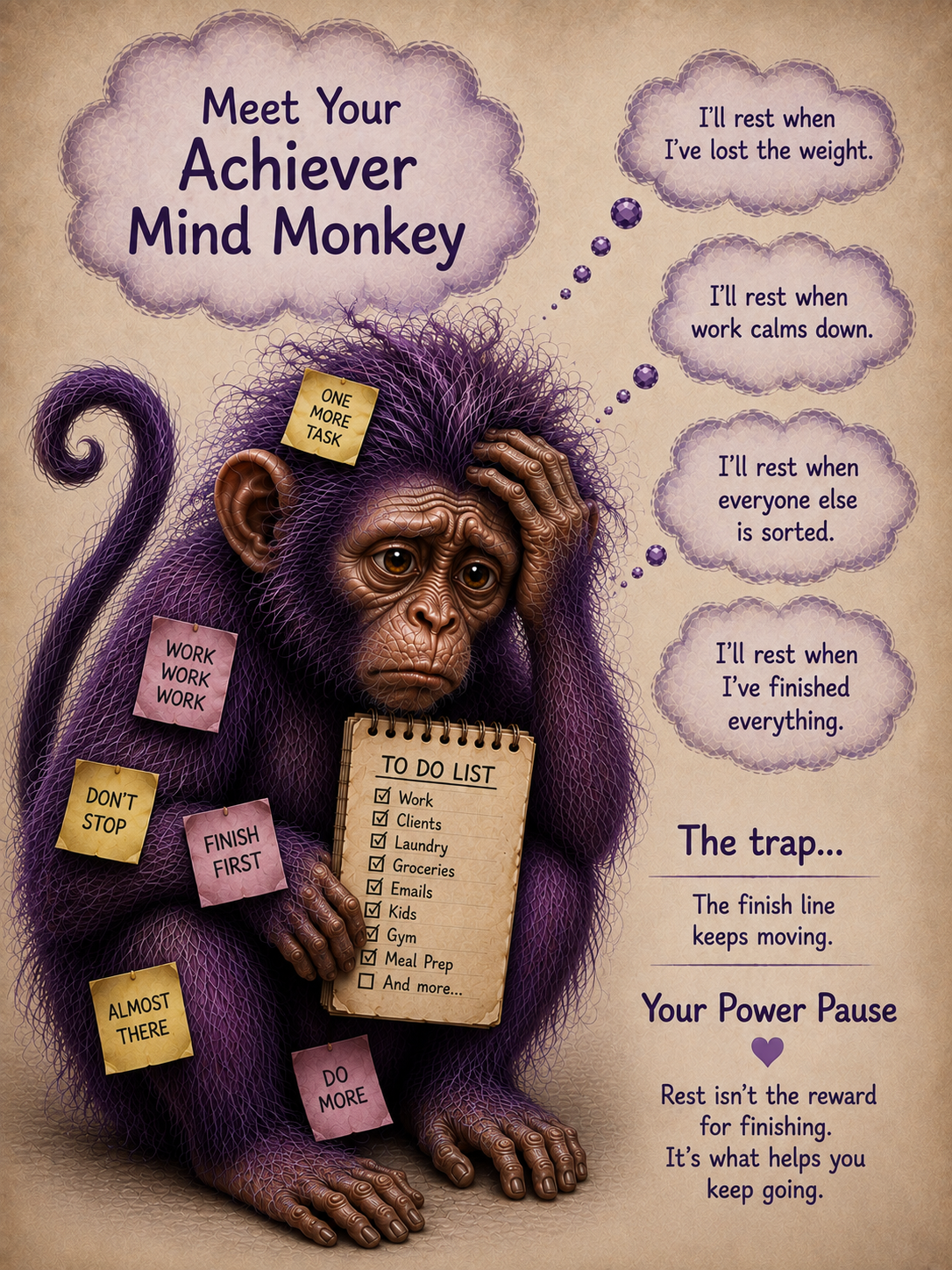
“Prove you're good enough.”
“Just one more thing.”
“I'll rest when this is finished.”
“I should be able to cope with this.”
“Come on, you can do more.”
That voice isn't something you need to get rid of. It's part of a pattern your brain has learned over time and sometimes its advice will be useful.
The skill is becoming better at recognising when you want to listen to it and when another response would serve you better.
This week, start noticing the moments when your instinct is to add more, push harder or keep going simply because that's what you usually do.
Before automatically acting on that instinct, ask yourself: “Am I trying to prove something right now, or support myself?”
Then consider: “What would support me best here?”
Sometimes the answer genuinely will be to follow through, challenge yourself or get the workout done. At other times, it might mean eating properly, getting to bed, asking for help, adjusting the plan or recognising that what you've already done is enough.
There isn't one correct answer. The Power Shift™ is giving yourself the opportunity to choose rather than automatically assuming that more is better.
Your ambition isn't your problem and becoming less driven isn't the goal.
The opportunity for you is to keep everything that's powerful about being an Achiever, your courage, commitment, resilience and ability to make things happen, while becoming more intentional about where you put that effort.
You already know how to work hard for the things that matter to you. Now you get to make sure you're one of them.
POWER30 is built for Achievers: thirty days of small, structured daily actions that give your drive somewhere useful to go — without adding another thing to push through.